Heat Treatment of Nickel Alloys: Solution Anneal, Aging and What Your PO Must Specify
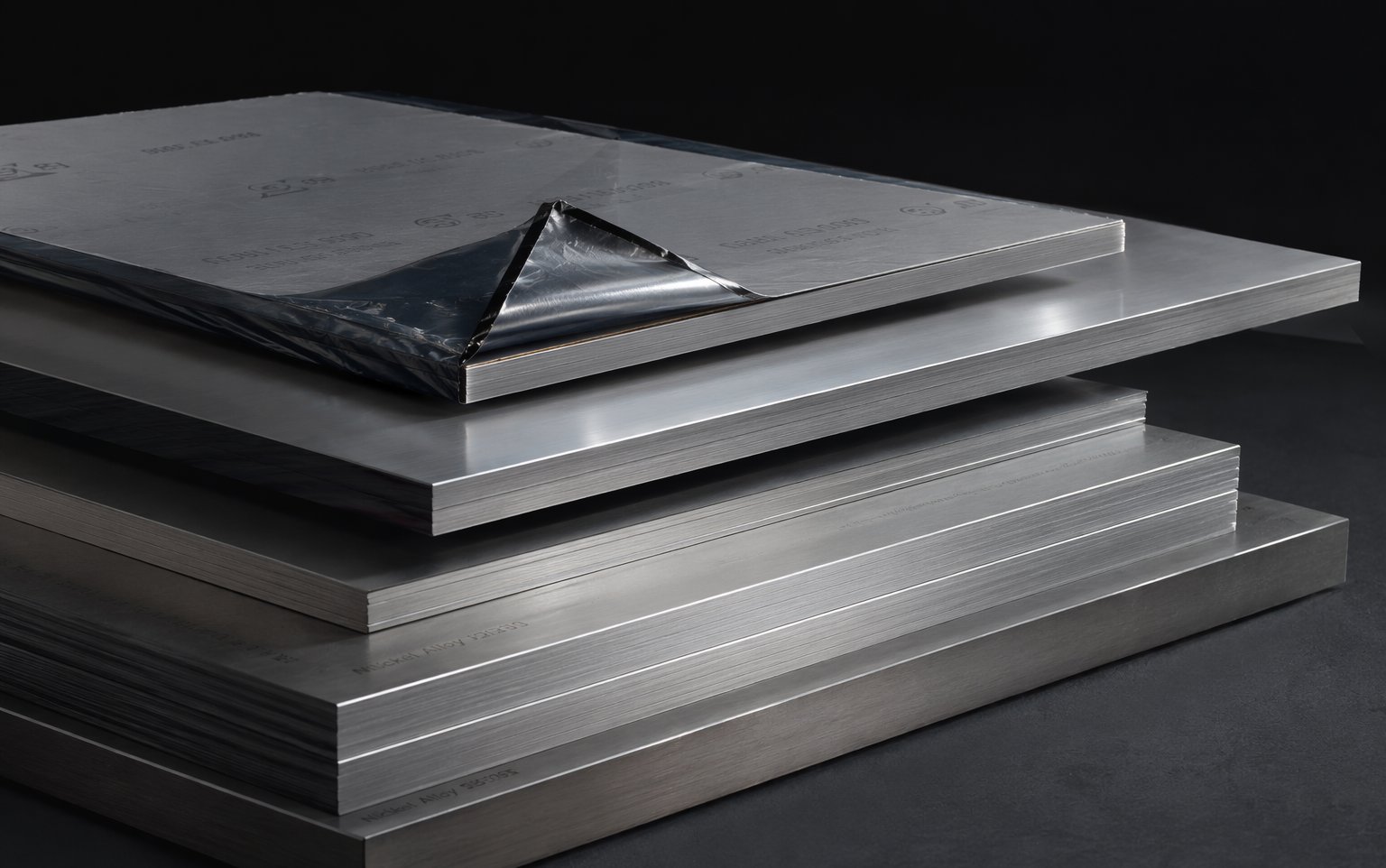
Two bars of Inconel 718 from the same heat can have yield strengths of 450 MPa or 1,100 MPa. The difference is nothing but heat treatment — and if your purchase order doesn't specify it, you get whatever the mill had in stock. Here's what the terms mean and how to specify them.
Solution annealing: the soft reset
Heating to 950–1,200 °C (grade-dependent) dissolves precipitates and homogenizes the structure; rapid cooling (water quench or fast air cool) locks it in. Result: the softest, most ductile, most corrosion-resistant condition — best for forming, welding and corrosion service. Grades like 625, C-276, 400 and 825 are only used in the solution-annealed condition; their properties come from chemistry, not heat treatment.
Age hardening: the strength recipe
A precipitation-hardening grade (718, K-500, X-750, Waspaloy) is solution-annealed first, then aged at 600–800 °C for hours. Tiny γ′/γ″ precipitates form and multiply strength 2–3×. The classic 718 cycle: 980 °C solution + 720 °C/8h, furnace cool to 620 °C/8h, air cool (per AMS 5662). Get the aging wrong — too hot, too long, wrong cool rate — and you either under-age (soft) or over-age (soft again, but permanently).
Stress relieving: the quiet one
A lower-temperature bake (400–650 °C) that reduces residual stress from machining or cold work without changing the basic condition. Often specified for springs and formed parts. Note: stress-relieving a heavily cold-worked part at the wrong temperature can trigger unwanted precipitation — check the grade datasheet first.
What to write on the PO
- Condition, explicitly: "solution annealed" / "annealed + aged per AMS 5662" / "cold drawn, stress relieved". Never just the grade name.
- The governing spec: AMS/ASTM with revision. The spec defines the cycle, the mechanical requirements and the test method — it is the heat treatment contract.
- Test evidence: tensile results per heat (and per lot for aged material), hardness survey where relevant. On our MTCs the heat-treatment batch is traceable to the mechanical results line by line.