Machining Nickel Alloys: Speeds, Tooling and Why They Work-Harden Against You
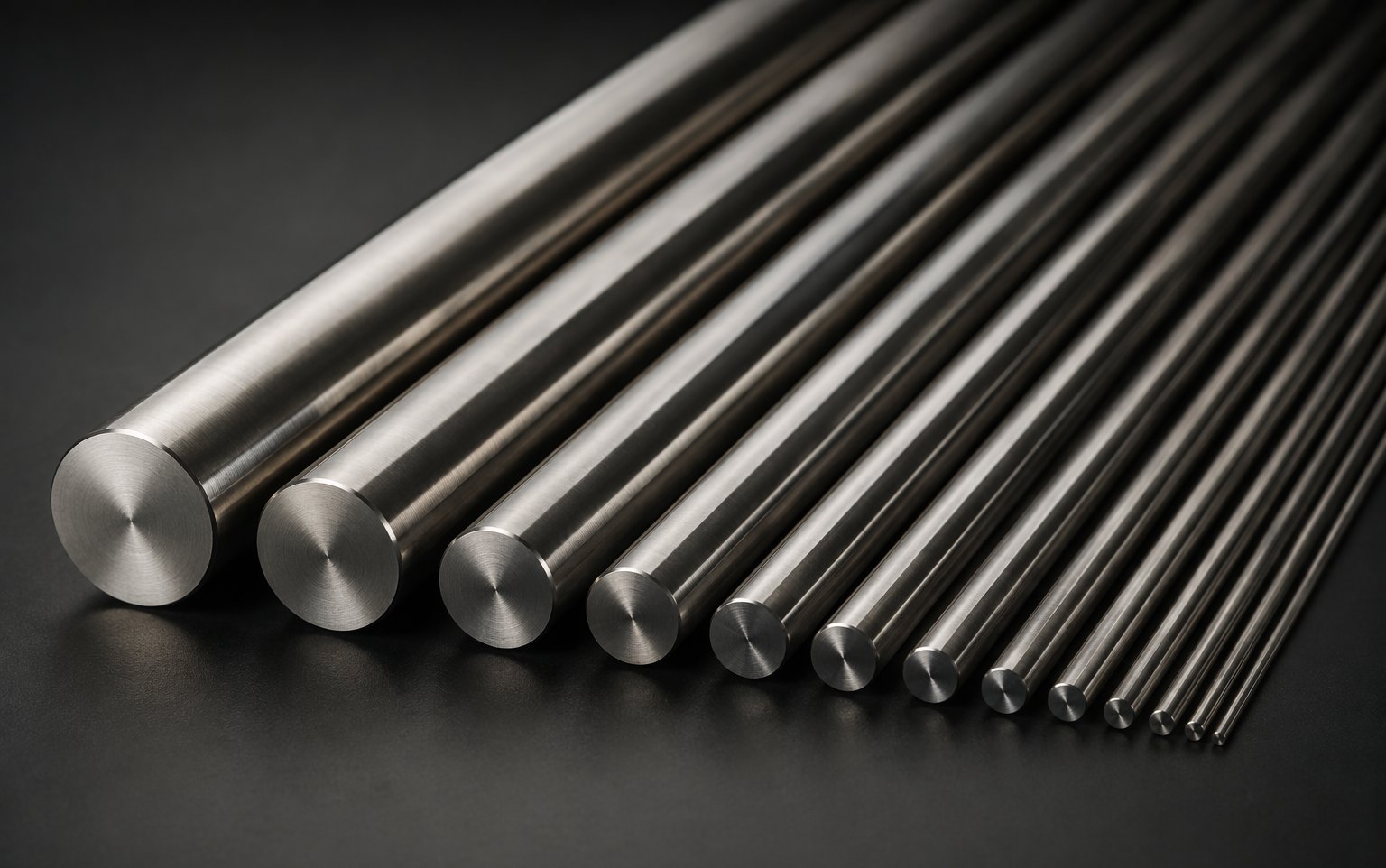
Every machining guide for nickel alloys says "low speeds, high feeds, rigid setups." True, but incomplete. The shops that succeed understand why: these alloys work-harden at the surface the instant a tool rubs instead of cuts. The second pass over a rubbed surface is machining something much harder than the bar you bought.
The physics in one paragraph
Nickel alloys have low thermal conductivity (heat stays in the tool tip, not the chip), high toughness (the chip doesn't want to break), and extreme work-hardening response. Your entire strategy is: get the heat out with the chip, keep the tool cutting — never rubbing — and never let a dull edge touch the workpiece.
Practical parameters (carbide tooling, general guidance)
- Turning: 20–50 m/min on age-hardened grades (718, K-500), 30–70 m/min on annealed grades (625, 400). Feed ≥ 0.15 mm/rev — stay under the work-hardened skin, never skim it.
- Tooling: sharp positive-rake carbide, PVD-coated, honed edge for roughing. CBN or ceramic only for finishing aged 718 at speed. Rigid, short overhang — chatter is a hardening machine.
- Coolant: high-pressure through-tool emulsion where possible; flood as a minimum. Dry machining nickel alloys is a false economy except with ceramics on 718.
- Drilling: peck, positive feed, cobalt or carbide split-point. A dwell of one second at hole bottom work-hardens it beyond the next tool's patience.
Grade-by-grade difficulty (easiest first)
- Monel R-405 — the free-machining grade, sulfurized on purpose. Closest thing to "easy" in this family.
- Monel 400, Nickel 200 — gummy but predictable; sharp tools and positive feed.
- 625, C-276, 825 — mid-pack; standard nickel-alloy discipline works.
- 718 aged, Waspaloy, K-500 — the hard end. Machine in the solution-annealed condition where possible and age afterward; finish with rigid setups and sharp ceramics/CBN.
Procurement tip: if your part is heavily machined, tell us at enquiry. We can supply bar in the optimal condition (annealed vs. aged) and straightness for your process — it often matters more than the cutting parameters.
Need material for this application? Send your spec — a named metallurgist replies with a certified quote within 24 hours. Request quote →